
Woven Installation ~ The Handmade Craft of Twenty One Tonnes
Lighting and Basket Installation by Twenty One Tonnes
Suspended between earth and air, light and fiber, tradition and contemporary design, this lighting and basket installation explores the quiet power of craftsmanship. Each basket, hand woven from elephant grass in Ghana, carries within it generations of knowledge, rhythm, and memory. When illuminated from within and arranged in sculptural clusters, these vessels transcend their utilitarian origins and become luminous forms—objects that hold not only light, but story.
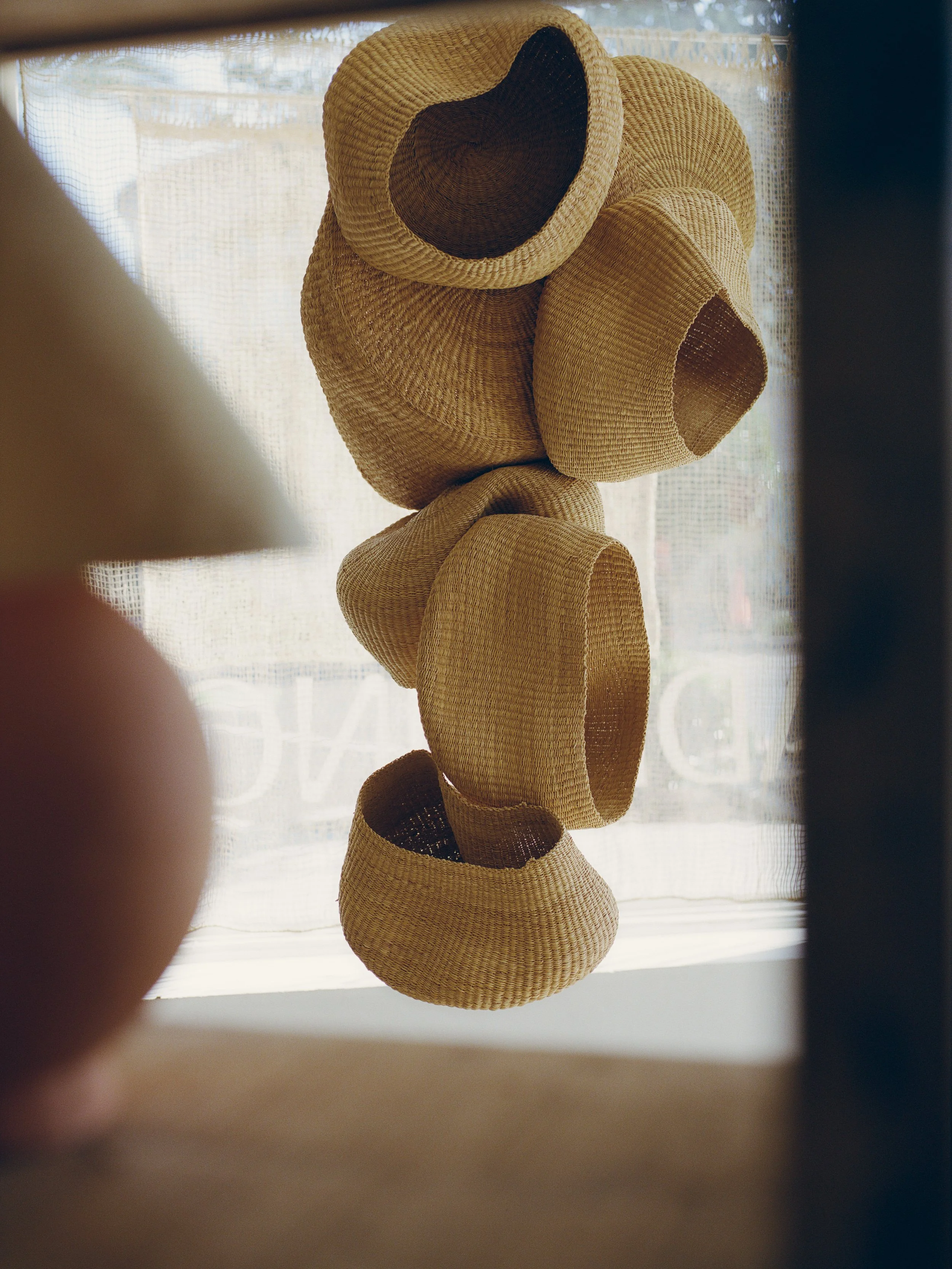
Woven installation by TwentyOneTonnes Studio. Photography by Maddy Pease and Carly Hildebrant
A Quiet Conversation Between Light and Fiber
In a world saturated with disposable goods and artificial light, the installation offers something different: warmth, texture, authenticity. It slows the viewer down. It encourages a closer look. And in the quiet glow of woven elephant grass, one encounters not only light, but lineage—threads of culture and care woven into every luminous form.
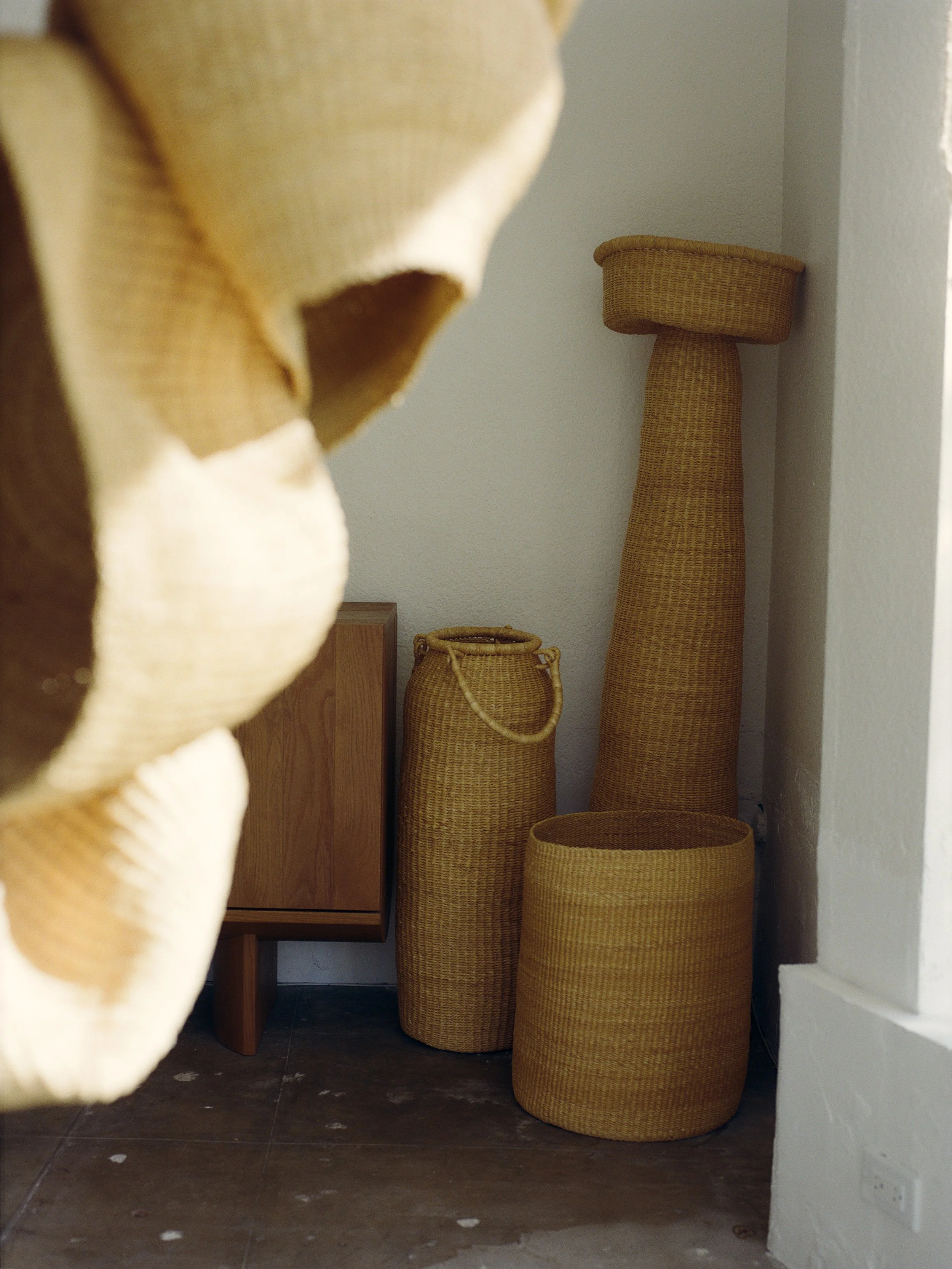
Baskets by TwentyOneTonnes Studio. Photography by Maddy Pease and Carly Hildebrant
The Artisans Behind Generational Craftsmanship
The baskets used in this installation are hand woven by the skilled artisans of Sirigu Women’s Organization for Pottery and Art (SWOPA). A non-governmental organization in northern Ghana, where weaving is both cultural expression and economic lifeline. Techniques are passed down through families, often from mother to daughter, father to son. The rhythm of weaving is meditative: strands are soaked, twisted, folded, and stitched into spiraling forms. Each basket can take days to complete, depending on scale and complexity. No two are identical. The slight asymmetries and variations are not imperfections; they are signatures of the human hand.
By sourcing these baskets through ethical and sustainable practices, the installation becomes more than an aesthetic gesture. It becomes part of a larger ecosystem of responsible design. Ethical sourcing ensures that artisans are paid fairly, work in safe conditions, and retain ownership of their traditional knowledge. Sustainable harvesting practices protect the grasslands from depletion, allowing elephant grass to regenerate naturally. This approach respects both people and land, recognizing that beauty and responsibility are not opposing values but interconnected ones.
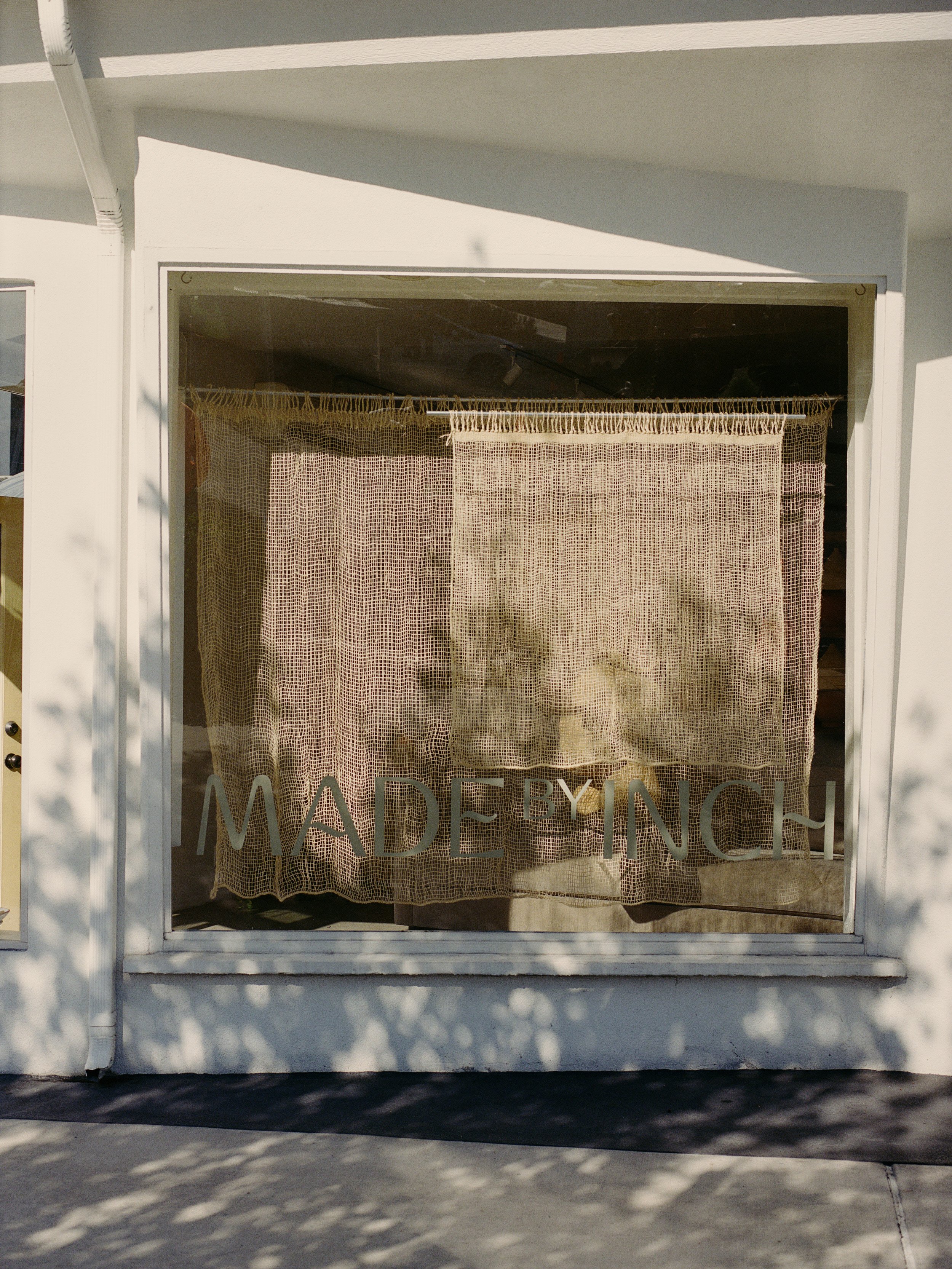
Woven display by TwentyOneTonnes Studio. Photography by Maddy Pease and Carly Hildebrant
Baskets & Lighting Made from Elephant Grass
Elephant grass is a sustainable indigenous material known for its structural integrity, rapid renewability, and minimal environmental impact. It grows along the banks of rivers, streams, and swampy areas in Ghana and across West Africa. It matures and tussles like wheat, with a broom-like flower at the top.
To harvest the straw, each broom is pulled down from the husk and left to grow into new tussles. The straw is harvested wet, dried in the sun, and prepared for weaving. The long, sturdy fibers create a weave that is at once lightweight and robust — flexible enough to take the curves and clusters of an installation like this one, strong enough to hold their form for years.
Why Ethical Sourcing Matters in Home Design
By sourcing these light shades and baskets through ethical and sustainable practices, the installation becomes more than an aesthetic gesture. It becomes part of a larger ecosystem of responsible design.
Ethical sourcing means artisans are paid fairly, work in safe conditions, and retain ownership of their traditional knowledge. Sustainable harvesting protects the grasslands from depletion, allowing the elephant grass to regenerate naturally. The two practices reinforce each other: a craft tradition can only continue if both the people and the land are protected.
We think about this often in our work. Nothing is truly luxurious if it costs someone else their fair wage or their forest. Beauty and responsibility are not opposing values, they are interconnected. Here at Made by Inch we hold both values dearly and it shows in the pieces we make.
The Installation Collaborators
Twenty One Tonnes is the Los Angeles-based studio behind the woven baskets and pendant lights. Their pieces are made in partnership with SWOPA in Ghana and with women artisans across West Africa. Beyond the editorial beauty of the work, what we appreciate most is the studio’s commitment to making the supply chain visible — naming the makers, documenting the process, and treating ethical sourcing as a starting point rather than a marketing line.
Maddy Pease is a Los Angeles-based film photographer, art director, and designer with a background in design and media arts from UCLA. Her work brings a quiet, observational warmth to the installation — the kind of light and texture that rewards a second look.
Carly Hildebrant is a Los Angeles-based film photographer whose work focuses on the energy in a space — atmospheric, intimate, alive to the texture of a room. She and Maddy worked together to document the installation across changing light throughout the day.
Visit us at the Made By Inch Showroom
If you’d like to see how a Made by Inch sofa is built, or sit on one in person - come say hi, take a seat and linger a while.
321 Pier Avenue, Hermosa Beach, CA 90254 | Monday – Saturday , 10am – 5pm | Or if you’d rather - Book an Appointment Here